Start Learning Free: Management of Multinational and Cross-Cultural Teams – Build Global Leadership, Communication, and Team Management Skills

Global business is no longer the exception. For many professionals, working across cultures, time zones, and communication styles is now part of everyday work. That is exactly why Start Learning Free: Management of Multinational and Cross-Cultural Teams is such a strong message for learners who want practical global leadership skills. This specialization is offered by University of California, Davis, taught by organizational consultants and UC Davis MBA alumni Cleveland Justis and Daniel Student, and is presented as a 4-course series with a beginner level, flexible schedule, and an estimated pace of 4 weeks at 10 hours a week. The current listing also shows a 4.6 rating from 120 reviews of courses in the program.
What makes this program especially valuable is its direct focus on real multinational work. The official overview says learners build the essential skills to work in and manage multinational and cross-cultural teams, learn how to navigate cultural differences that can trip up teams, understand the opportunities and challenges created by virtual multinational collaboration, and grow as cross-cultural leaders. It also highlights applied learning through discussions and activities where learners reflect on their own cultural experience and compare perspectives from people around the world.
Why This Program Matters
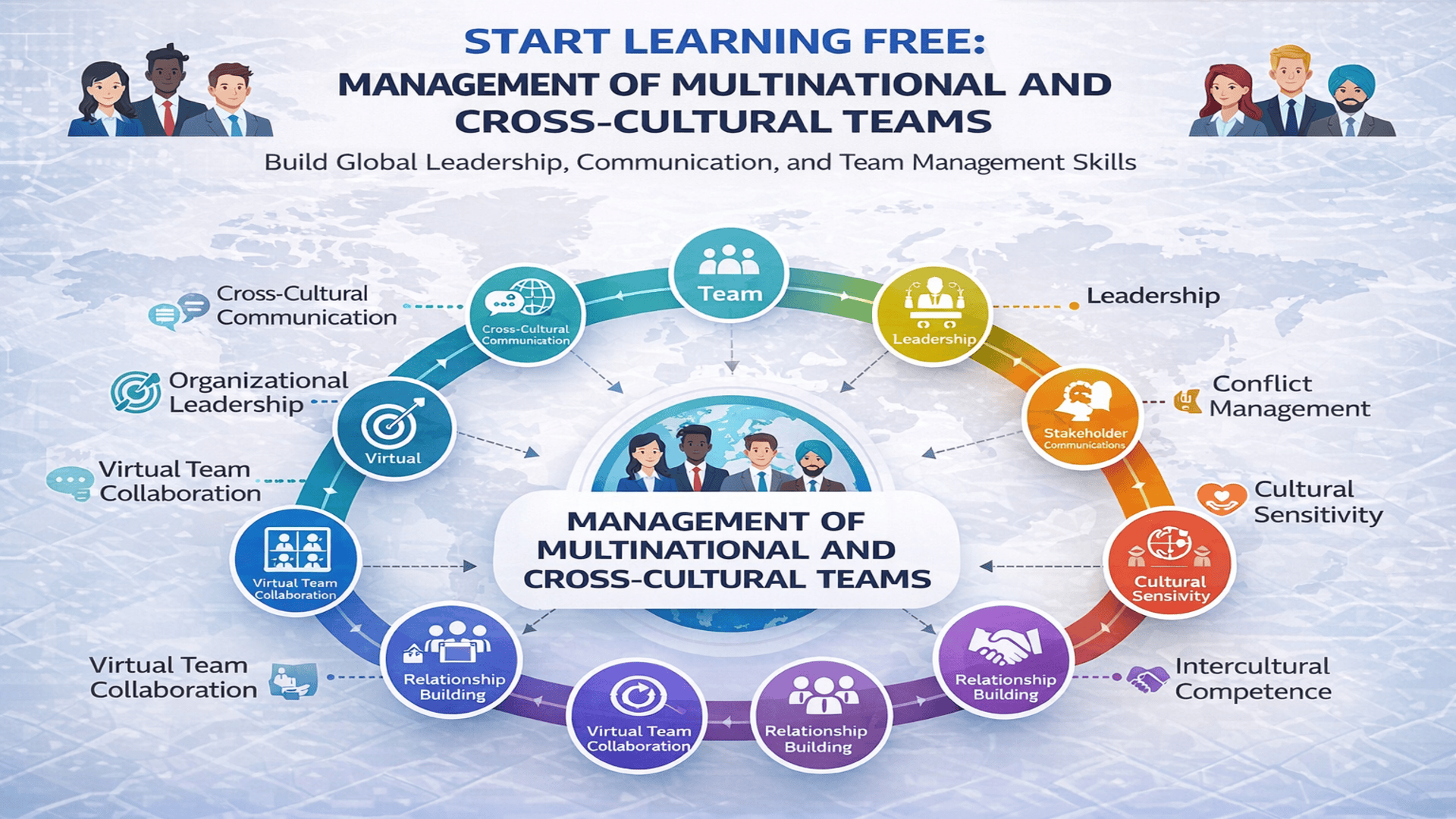
Cross-cultural teamwork can create major advantages, but it can also create misunderstandings around communication, decision-making, expectations, and collaboration. This program matters because it helps professionals understand how culture shapes work, how to communicate across differences, and how to lead teams more effectively in multinational settings. The specialization’s listed skills include communication strategies, conflict management, cross-functional collaboration, cultural diversity, cultural responsiveness, cultural sensitivity, intercultural competence, leadership, organizational leadership, relationship building, and stakeholder communications.
From an SEO perspective, this topic is also highly valuable because it aligns with what professionals already search for: cross-cultural leadership, multinational team management, intercultural communication, global collaboration, and virtual team leadership. Using start learning free naturally in the title and body gives readers a lower-friction reason to click, especially when they want to explore the course before making a full commitment. The beginner-level positioning also makes the program attractive to a broad audience, including current managers, aspiring managers, and anyone working on cross-cultural teams.
What You Will Learn
According to the official specialization page, learners in this program will build the ability to work in and manage multinational and cross-cultural teams, understand how cultural differences affect approaches to work, navigate virtual multinational collaboration, and rise as cross-cultural leaders. The applied-learning section also says learners will explore insights about their own cultural experiences and gain perspective from responses shared by people around the world.
The first course page adds more concrete outcomes. It says learners will explain the concept of culture, understand how it affects approaches to work, and identify the opportunities and challenges that arise in multinational and cross-cultural teams. That makes the program especially useful for professionals who want more than general diversity advice and instead need practical team-management and communication tools for real global work environments.
Program Structure
This specialization is built as a 4-course series. The current public course information identifies the following courses: Introduction to Multinational and Cross-Cultural Teams, Cross-Cultural Communication and Management, Cross-Cultural Virtual Spaces and Teams, and Leadership in Multinational, Cross-Cultural Teams.
1) Introduction to Multinational and Cross-Cultural Teams
The first course is listed at 14 hours on the specialization page and 1 week at 10 hours a week on the individual course page. It focuses on the concept of culture, how culture affects approaches to work, and the challenges and opportunities within multinational and cross-cultural teams. Its listed skills include culture, intercultural competence, team building, virtual teams, team management, communication, leadership, and conflict management.
2) Cross-Cultural Communication and Management
This course is part of the specialization and is positioned to help learners build deeper subject-matter expertise in cross-cultural communication and management. The course page confirms it is one of the courses in the specialization and is designed to help learners develop job-relevant skills with hands-on projects and a foundational understanding of the topic.
3) Cross-Cultural Virtual Spaces and Teams
The specialization description explicitly states that learners will understand the new opportunities and challenges created by virtual multinational collaboration, which points directly to the practical importance of virtual teamwork in the course sequence. The UC Davis continuing education page also lists Cross-Cultural Virtual Spaces and Teams as one of the four specialization courses.
4) Leadership in Multinational, Cross-Cultural Teams
This course focuses on leadership expectations across cultures and how those differences affect team performance. The current page says learners explore different leadership models and understand how cultural differences in what is expected of leaders can affect results. Its listed skills include team leadership, decision making, organizational leadership, expectation management, virtual teams, diversity and inclusion, and intercultural competence.
Skills You Can Build
This program is especially relevant for professionals who want stronger international leadership and collaboration skills. Based on the current listing, learners can build skills in:
✅ Cross-cultural communication
✅ Team management
✅ Leadership
✅ Conflict management
✅ Stakeholder communications
✅ Cultural sensitivity
✅ Cultural diversity
✅ Intercultural competence
✅ Relationship building
✅ Virtual team collaboration
✅ Organizational leadership
These skills matter because global teams often succeed or fail based not only on technical competence, but also on how well people navigate differences in communication, expectations, leadership style, and collaboration habits. The specialization is designed specifically to help learners turn those differences into opportunities rather than obstacles.
Who Should Take This Program
This program is a strong fit for:
✅ Managers leading cross-cultural teams
✅ Employees who aspire to management roles
✅ Consultants and supervisors working in multinational settings
✅ Professionals collaborating across countries or cultures
✅ Learners who want to start learning free before deciding whether to continue the full specialization
The first course page is especially clear about its audience, noting that it is relevant for managers leading cross-cultural teams, employees aspiring to become managers, consultants, and supervisors. That makes the specialization practical not only for current leaders, but also for people preparing to lead in global environments.
How to Start Learning Free This Course
Here is the exact process you wanted included:
How to Start Learning Free
- Open the course link.
- If the page is a Professional Certificate or Specialization, scroll down and select one of the individual courses inside the program.
- Open the course you selected.
- Click Enroll.
- After signing in, choose Preview instead of Start Free Trial.
- You can now watch the course videos and start learning for free.
Because this page is a specialization, the most practical path is to begin with one of the included individual courses, such as Introduction to Multinational and Cross-Cultural Teams, and then look for the preview option during enrollment.
Why This Program Stands Out
This program stands out because it combines culture, communication, leadership, virtual teamwork, and multinational collaboration in one focused learning path. Instead of discussing global teamwork only at a surface level, it helps learners understand how culture affects work behavior, how communication is interpreted across contexts, and how leadership expectations vary from one cultural environment to another. It also adds practical, perspective-building activities that help learners compare their experiences with those of others around the world.
Build Global Leadership and Cross-Cultural Team Skills
Learn cross-cultural communication, virtual collaboration, conflict management, relationship building, and practical leadership skills for multinational teams.
Open the program, choose one of the included courses, and use the Preview option to begin learning for free when available.