Start Learning Free: Identifying and Managing Security Gaps for Remote Teams to Strengthen Cybersecurity, Risk Management, and Data Protection

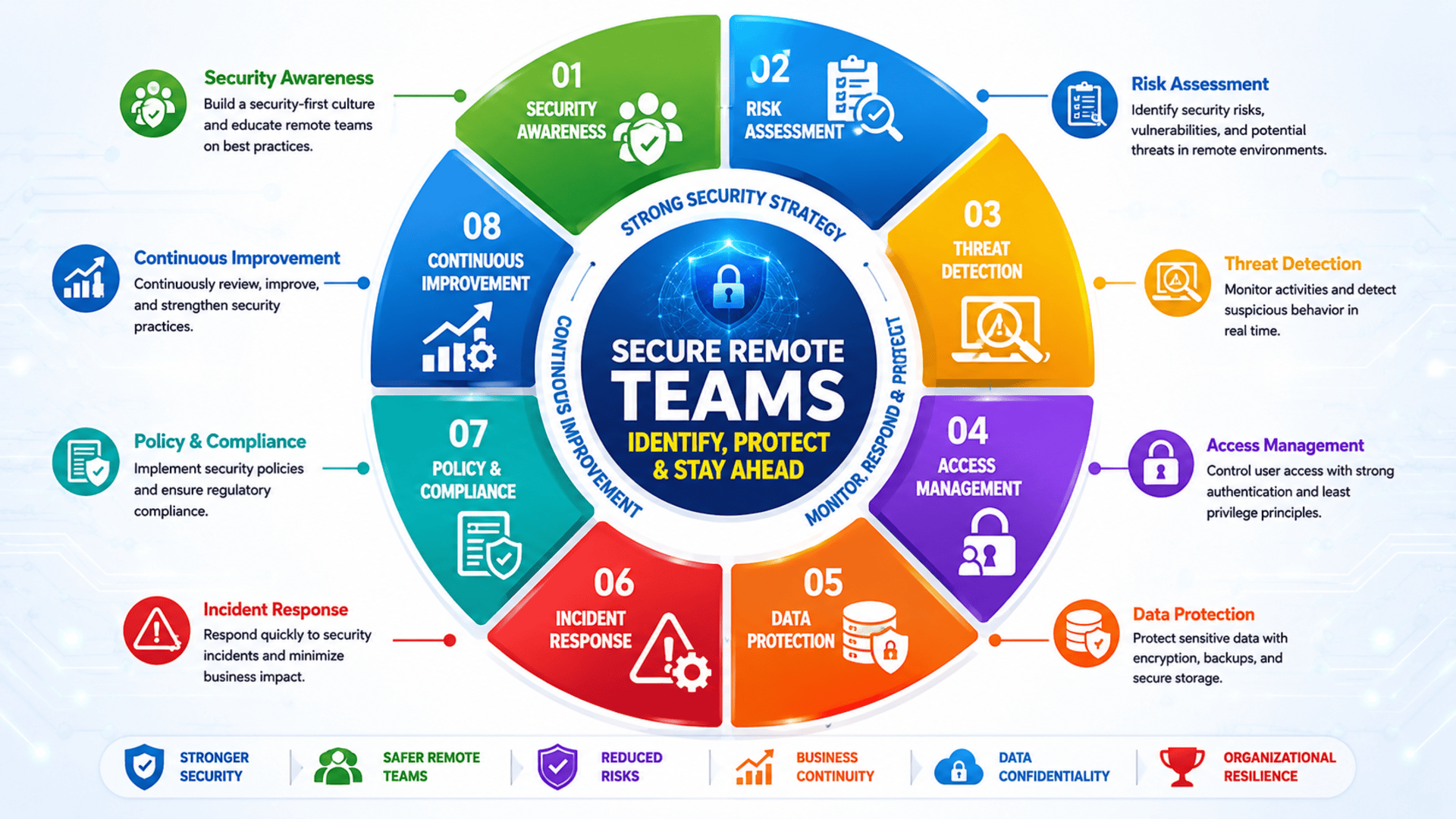
Remote work has transformed the way organizations operate, but it has also introduced new cybersecurity risks, security vulnerabilities, and compliance challenges.
The Identifying and Managing Security Gaps for Remote Teams specialization helps learners understand how to secure remote work environments, protect sensitive business data, manage cyber risks, and strengthen organizational security practices.
This program is designed for professionals, managers, IT teams, cybersecurity learners, and remote workforce leaders who want to improve security awareness and develop practical strategies for protecting distributed teams in modern digital environments.
Why Remote Team Security Matters More Than Ever
As remote and hybrid work environments continue growing worldwide, organizations face increasing cybersecurity challenges.
Remote teams often rely on:
✅ Cloud platforms
✅ Remote access systems
✅ Collaboration tools
✅ Personal devices
✅ Home networks
✅ Shared digital resources
Without proper security controls, these environments can create opportunities for cyberattacks, data breaches, unauthorized access, and operational disruptions.
Organizations now need professionals who understand how to identify security gaps and proactively reduce cybersecurity risks.
What Is the Identifying and Managing Security Gaps for Remote Teams Specialization?
This Course is designed to help learners understand the evolving cybersecurity landscape of remote work environments and develop practical security strategies for protecting distributed teams.
The program focuses on:
✔️ Remote Team Security Fundamentals
✔️ Cyber Risk Assessment
✔️ Security Gap Identification
✔️ Threat Detection
✔️ Vulnerability Management
✔️ Security Controls
✔️ Incident Response Planning
✔️ Compliance and Data Protection
✔️ Security Monitoring
✔️ Continuous Security Improvement
Learners gain practical knowledge that can help organizations strengthen cybersecurity resilience in remote work settings.
Learn the Fundamentals of Remote Team Security
The Course begins by introducing learners to the unique security challenges associated with remote work.
Topics include:
✅ Remote work security environments
✅ Cybersecurity principles
✅ Remote access risks
✅ Security awareness practices
✅ Threat classification
✅ Infrastructure protection
Understanding these concepts provides a strong foundation for managing security risks in distributed teams.
Understand Modern Cybersecurity Threats
Remote work environments face a wide range of cyber threats.
Learners explore:
✔️ Phishing attacks
✔️ Credential theft
✔️ Malware threats
✔️ Unauthorized access attempts
✔️ Social engineering attacks
✔️ Data leakage risks
✔️ Insider threats
✔️ Remote access vulnerabilities
The program helps learners recognize potential threats before they become serious security incidents.
Learn Security Risk Assessment Techniques
Security professionals must identify vulnerabilities before attackers exploit them.
This specialization introduces:
✅ Cybersecurity assessments
✅ Threat modeling
✅ Vulnerability assessments
✅ Risk prioritization
✅ Security evaluations
✅ Security gap analysis
These skills help organizations identify weaknesses and improve overall security posture.
Explore Security Tools for Remote Teams
Technology plays a major role in protecting distributed workforces.
Learners gain insight into:
✔️ Security software solutions
✔️ Endpoint protection tools
✔️ Authentication systems
✔️ Monitoring platforms
✔️ Access control technologies
✔️ Security management tools
The program also discusses how to evaluate and select security solutions based on organizational needs.
Strengthen Threat Detection and Monitoring Capabilities
Cybersecurity requires continuous monitoring and proactive threat management.
Topics include:
✅ Threat detection strategies
✅ Security monitoring practices
✅ Continuous monitoring frameworks
✅ Risk identification techniques
✅ Security event analysis
✅ Early warning systems
Organizations that monitor threats effectively can respond faster and reduce the impact of security incidents.
Learn Incident Response Planning
No security system is completely immune to cyber threats.
The specialization teaches learners how to:
✔️ Develop incident response plans
✔️ Prepare for security breaches
✔️ Manage cybersecurity incidents
✔️ Coordinate response activities
✔️ Conduct post-incident evaluations
✔️ Improve organizational resilience
Strong incident response planning helps organizations recover more quickly from cyber events.
Understand Compliance and Data Protection Requirements
Remote work environments must often comply with legal, regulatory, and organizational security requirements.
The program covers:
✅ Data protection principles
✅ Security governance concepts
✅ Compliance considerations
✅ Security policy development
✅ Security requirements analysis
✅ Privacy protection practices
These topics help learners understand how security and compliance work together to protect organizations.
Develop Security Policies for Remote Work
Policies play an essential role in creating secure remote work environments.
Learners discover how to:
✔️ Build remote work security policies
✔️ Define acceptable usage standards
✔️ Improve security awareness
✔️ Support employee security practices
✔️ Reduce human-related security risks
✔️ Establish security guidelines for distributed teams
Effective policies help organizations maintain consistent security standards across remote teams.
Learn Continuous Security Improvement Strategies
Cybersecurity is not a one-time activity.
The specialization emphasizes:
✅ Continuous improvement models
✅ Security performance evaluation
✅ Post-incident learning
✅ Security maturity development
✅ Future threat preparation
✅ Long-term risk reduction strategies
Organizations that continuously improve security practices are better prepared for evolving cyber threats.
Gain Practical Cybersecurity Knowledge
The program includes practical learning activities designed to reinforce key concepts.
Learners engage with:
✔️ Interactive activities
✔️ Knowledge assessments
✔️ Security scenarios
✔️ Cyber risk evaluations
✔️ Threat analysis exercises
✔️ Module-based examinations
This hands-on approach helps learners apply cybersecurity concepts to realistic remote work environments.
Skills You Can Build
By completing this specialization, learners can strengthen skills related to:
✔️ Cybersecurity
✔️ Security Management
✔️ Incident Response
✔️ Vulnerability Assessments
✔️ Threat Detection
✔️ Security Controls
✔️ Security Strategy
✔️ Infrastructure Security
✔️ Remote Access Systems
✔️ Continuous Monitoring
✔️ Cyber Risk Management
✔️ Compliance and Governance
These capabilities are increasingly valuable across industries.
Who Should Take This Program?
This specialization is ideal for:
✅ Cybersecurity Professionals
✅ IT Support Specialists
✅ Security Analysts
✅ Network Administrators
✅ Project Managers
✅ Operations Managers
✅ Compliance Professionals
✅ Remote Team Leaders
✅ Business Owners
✅ Students Interested in Cybersecurity
The content is suitable for learners who want to better understand security challenges in modern remote work environments.
Why Cybersecurity Skills Are Valuable for Career Growth
Cybersecurity remains one of the fastest-growing professional fields worldwide.
Organizations increasingly need professionals who can:
➡️ Protect business systems
➡️ Reduce cyber risks
➡️ Improve compliance readiness
➡️ Strengthen security operations
➡️ Support digital transformation initiatives
➡️ Build resilient remote work environments
Security expertise is becoming a critical skill across technology, business, healthcare, finance, government, and consulting sectors.
Start Learning Free Today
One of the biggest advantages of this specialization is that you can start learning free before making any financial commitment.
Many learners are unaware that they can access course content through the preview option.
How to Start Learning Free
✔️ Open the course link
✔️ If the page is a Professional Certificate or Specialization, scroll down and select one of the individual courses inside the program
✔️ Open the course you selected
✔️ Click Enroll
✔️ After signing in, choose Preview instead of Start Free Trial
✔️ You can now watch the course videos and start learning for free
This approach allows learners to explore the content, understand cybersecurity concepts, and begin building valuable remote security skills without immediate payment.
Why This Program Stands Out
Many cybersecurity courses focus only on technical concepts.
This specialization combines:
✔️ Remote Team Security
✔️ Cyber Risk Management
✔️ Threat Detection
✔️ Vulnerability Assessment
✔️ Incident Response Planning
✔️ Security Monitoring
✔️ Compliance Awareness
✔️ Continuous Security Improvement
The result is a practical learning experience focused specifically on modern remote work environments.
Career Opportunities
The skills developed in this specialization can support career growth in areas such as:
✅ Cybersecurity
✅ Security Analysis
✅ Risk Management
✅ Security Operations
✅ IT Governance
✅ Compliance Management
✅ Security Consulting
✅ Remote Workforce Security
✅ Infrastructure Protection
✅ Information Security
As organizations continue expanding remote work operations, professionals with cybersecurity expertise remain highly valuable.
Identifying and Managing Security Gaps for Remote Teams
Learn cybersecurity, threat detection, vulnerability assessment, incident response, remote team security, compliance, and risk management strategies.
✔️ Cybersecurity
✔️ Threat Detection
✔️ Incident Response
✔️ Vulnerability Assessment
✔️ Remote Team Security