Start Learning Free Engineering Project Management Skills: Improve Planning, Execution, and Project Success

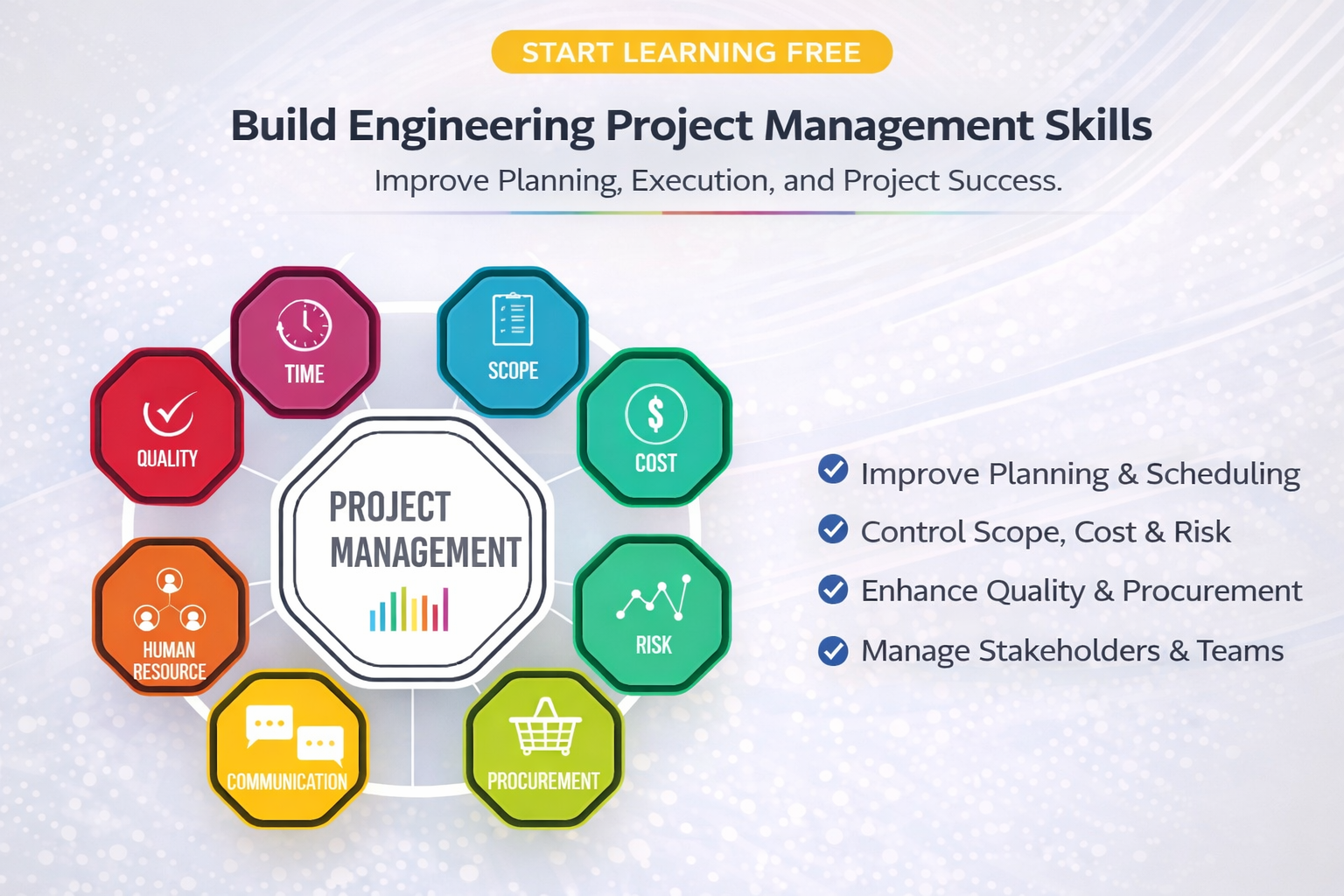
Engineering projects rarely succeed through technical expertise alone. They also require strong planning, clear scope definition, realistic schedules, cost control, stakeholder alignment, risk management, team coordination, and disciplined execution. This Course is built to help engineers develop exactly those project management capabilities in a structured, practical way. It is offered by Rice University, includes a 3-course series, and is designed as an introduction to project management for engineers moving into leadership roles or preparing for their first leadership position. The program also includes a shareable certificate.
One of the strongest advantages of this program is its applied format. The official program page states that learners work through an engineering case study and prepare key Project Execution Plan documents, including a Project Charter, Stakeholder Engagement Matrix, Statement of Work, Work Breakdown Structure, Project Schedule, Project Estimate, Project Risk Matrix, and Project Cause and Effect Diagram. Learners also calculate project progress using the Earned Value method.
Why Engineering Project Management Matters
Engineers often move into roles where they are expected to lead work, coordinate teams, manage expectations, and deliver results on time and within budget. This specialization is valuable because it is specifically targeted at engineers who want to improve project management skills for a new leadership role or before stepping into one. It focuses on the tools and strategies needed to manage projects more effectively and successfully, while building knowledge, confidence, and a competitive edge for leadership growth.
The skills listed on the official page reflect that practical focus. They include communication planning, cost management, earned value management, organizational structure, planning, procurement, project documentation, project estimation, project management, project risk management, project schedules, project scoping, quality assurance, requirements management, risk management, scheduling, scope management, stakeholder management, team management, and work breakdown structure.
What You Will Learn
This specialization helps learners build the core project management capabilities needed in engineering environments. Across the program, learners work on:
✅ project initiation and planning
✅ stakeholder analysis and management
✅ project charter development
✅ scope, schedule, and budget creation
✅ earned value tracking
✅ risk analysis and response planning
✅ quality planning and quality tools
✅ team management and procurement planning
These outcomes come directly from the Course page and course descriptions, which emphasize both formal project planning documents and the management practices needed to improve project performance.
The 3 Courses Inside the Program
1) Engineering Project Management: Initiating and Planning
This first course is listed at 20 hours. The official page says learners gain the tools to initiate a project plan, manage stakeholders and relationships, organize a team, develop a project charter, and build a business case for a project. By the end, learners perform project assessments, identify deliverables, create a stakeholder analysis and management plan, analyze project organization, create a charter, and calculate net present value.
2) Engineering Project Management: Scope, Time and Cost Management
The second course is listed at 23 hours. It focuses on scope, schedule, and budget management. Learners create a requirements document, project scope statement, work breakdown structure, critical path schedule, bar chart schedule, project cost estimate, and project status using earned value calculation. The course also introduces change management techniques.
3) Engineering Project Management: Risk, Quality, Teams, and Procurement
The third course focuses on the support functions that distinguish highly successful projects from average ones. According to the official course page, learners identify positive and negative risks, develop risk strategies, perform qualitative risk analysis, identify contingencies and reserves, develop a quality plan, use cause-and-effect tools, create a prioritization matrix, develop a team management plan, and create a procurement plan with contracts and incentives.
Who Should Take This Program
This specialization is a strong fit for engineers who want to build project management capability for a current or upcoming leadership role. The official page explicitly says it is targeted to engineers interested in improving project management skills in a new leadership position or in advance of a first leadership position.
It is also useful for professionals who want stronger foundations in project planning, scope control, scheduling, earned value, risk, quality, and stakeholder management. Because the specialization is framed as an introduction, it is well suited for learners who want practical project tools without needing an advanced background in formal project management. That is a reasoned inference from the official description and course structure.
How This Program Supports Planning, Execution, and Project Success
Project success depends on more than getting started well. It depends on maintaining control across scope, time, cost, risk, quality, teams, and procurement. This specialization addresses that full picture. The first course builds the project foundation, the second develops scope, schedule, and cost control, and the third covers the support functions that drive stronger overall performance.
That structure makes the program especially practical for engineers. Instead of focusing on abstract management theory, it centers on real project documents, planning deliverables, and decision tools that engineers can use in actual project environments. The case-study approach and earned value work add further practical value for learners who want usable skills, not just conceptual exposure.
Start Learning Free: How to Begin
A strong traffic and conversion angle for this program is simple: readers can start learning free. Since the specialization is clearly structured as three individual courses inside one program, the practical path is to open the main program page, scroll to one of the included courses, open that course, click Enroll, sign in, and choose Preview instead of Start Free Trial when that option is available. The platform’s own help text also says many courses can be previewed for free through the first module.
How to Start Learning Free
✅ Open the course link
✅ If the page is a Professional Certificate or Specialization, scroll down and select one of the individual courses inside the program
✅ Open the course you selected
✅ Click Enroll
✅ After signing in, choose Preview instead of Start Free Trial
✅ You can now watch the course videos and start learning for free
Build Stronger Engineering Project Management Skills
Improve planning, scope control, scheduling, cost management, risk analysis, and project execution with a practical learning path designed for engineers.
Explore the program and begin with the preview option available through an individual course inside the specialization.