Start Learning Free Customer Centricity Skills: Improve Customer Experience, Loyalty, and Business Growth

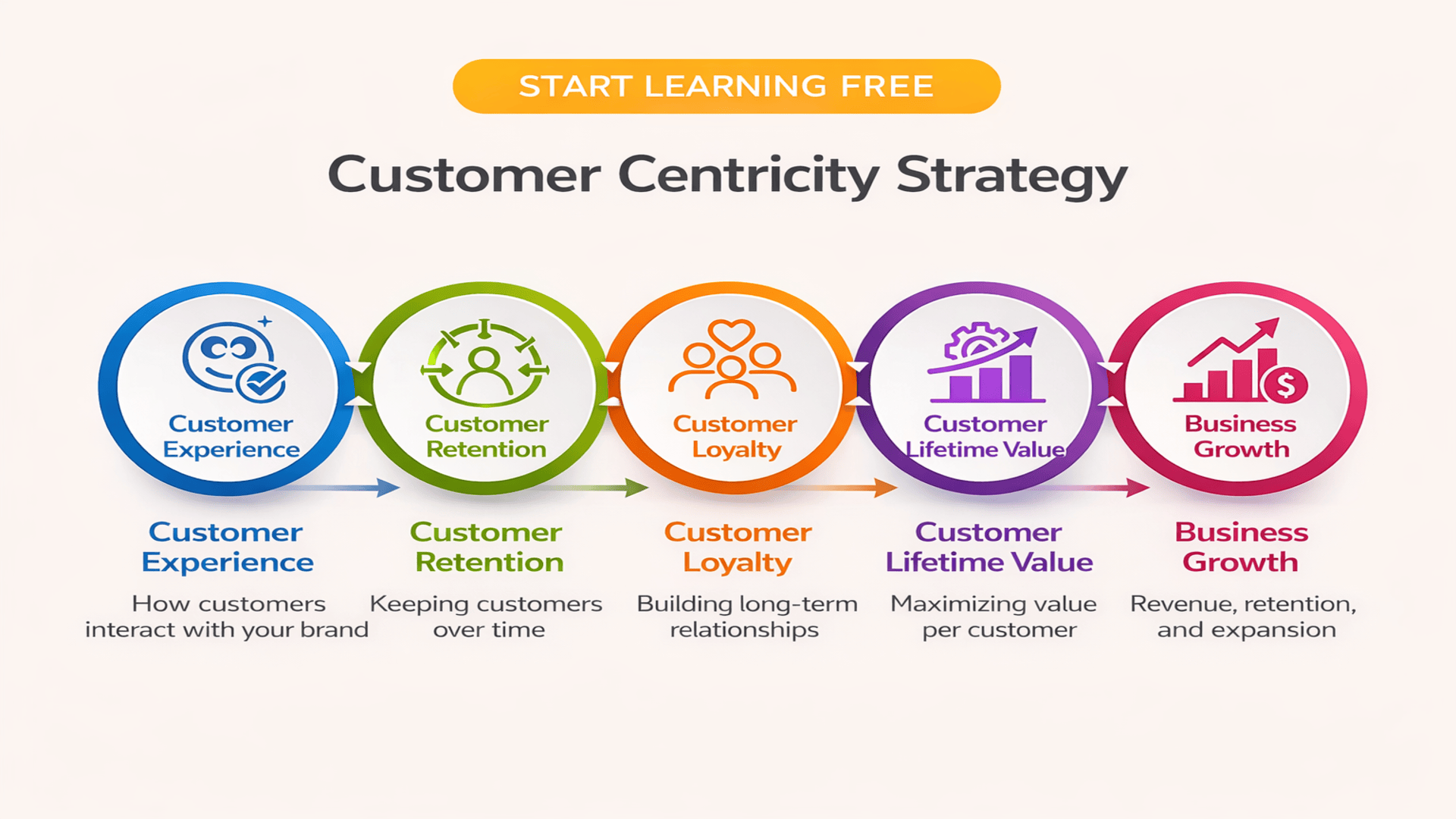
Customer centricity is no longer a nice extra for businesses. It is a practical strategy for improving retention, strengthening loyalty, reducing unnecessary costs, and building long-term growth. When companies understand customers more deeply and organize their decisions around customer value, they often create stronger relationships and better business outcomes. This Course is designed to help learners understand exactly how that works and how to apply customer centricity practices in a real business environment.
According to the official program page, this is a 4-course specialization that presents customer centricity as a competitive advantage. It includes applied learning, focuses on practical business implementation, and is taught by Professor Jagdish Sheth. The page explains that learners study proven strategies and practical steps for implementing customer-centric practices into a business, with the goal of growing revenue and cutting costs by keeping existing customers through a customer-centric culture.
One reason this program is valuable is that it goes beyond general customer service ideas. It focuses on customer lifetime value, retention, customer-centric accounting, business strategy, customer insights, customer relationship building, customer experience strategy, and sustainable growth. The official page also lists skills such as brand loyalty, business strategy, customer analysis, customer retention, customer relationship management, expectation management, diversity marketing, and social impact. That makes it relevant for professionals who want to understand customer centricity not only as a marketing concept, but as a broader business strategy.
Why Customer Centricity Matters
Many organizations still operate with product-centered habits, internal silos, and accounting systems that do not fully reflect customer value. This specialization addresses that challenge directly. The official course description for the first course explains that many organizations struggle to implement customer centricity properly because of internal operations, processes, and especially cost accounting systems that remain product-centric instead of customer-centric. It also emphasizes customer lifetime value as a core concept and gives a practical example of long-term household spending to show why retention matters.
That makes this learning path especially useful for professionals who want to think more strategically about growth. Instead of focusing only on acquiring more customers, the program encourages learners to think about keeping the customers they already have, improving loyalty, increasing value over time, and creating a culture that supports customer-centered decision-making. That shift can affect profitability, experience quality, and long-term business resilience.
What You Will Learn
The specialization page describes this program as a master class in customer centricity. Learners work through business problems posed by the instructor and apply ideas to real-world scenarios. The applied learning project focuses on helping learners understand how to grow a business and reduce costs by keeping existing customers through a customer-centric culture.
From the skills and course description on the official page, learners can expect to build knowledge in:
✅ customer lifetime value
✅ customer retention and loyalty
✅ customer relationship building
✅ customer insights and analysis
✅ customer experience strategy
✅ business strategy and ethics
✅ consultative approaches
✅ customer-centric culture and implementation
These topics make the specialization a strong fit for professionals who want practical insight into how customer centricity supports both customer experience and measurable business performance.
Course Structure
The official specialization page confirms that this is a 4-course series. It also highlights the first course, Customer Centricity as Competitive Advantage, which is listed at about 10 hours and explains why companies should be customer centric, how customer centricity can support revenue growth and cost reduction, and why organizations often struggle to implement it well.
Because the program is structured as a specialization made up of individual courses, it gives learners a guided path instead of a single standalone lesson. That structure is useful for people who want a more complete understanding of customer centricity rather than a quick overview. This is an inference based on the program format shown on the official page.
Who Should Take This Program
This specialization can be valuable for business professionals, marketers, customer experience professionals, strategy teams, founders, managers, and anyone responsible for growth, loyalty, or customer relationships. It is especially useful for people who want to understand why customer centricity matters at a strategic level and how it can be implemented more effectively across a business. That conclusion is based on the skills, outcomes, and business focus shown on the official program page.
It can also help learners who want to move beyond surface-level customer messaging and build a stronger understanding of customer analysis, retention, relationship-building, and business strategy. Since the official page positions the program around practical implementation and real-world scenarios, it fits learners who prefer applied business learning over purely theoretical content.
How This Program Supports Customer Experience, Loyalty, and Business Growth
Customer centricity influences more than communication. It shapes how a business prioritizes customers, evaluates value, builds trust, and creates longer-lasting relationships. The official page repeatedly connects customer-centric thinking to growth, retention, and cost reduction. That is important because many businesses spend heavily on acquisition while overlooking the financial value of keeping existing customers engaged and loyal.
This specialization helps learners see customer centricity as a system, not just a slogan. It links customer experience strategy, customer insights, customer relationship building, customer lifetime value, and internal business design into one broader framework. That makes it especially relevant for people who want stronger strategic thinking and better decision-making around customers.
Start Learning Free: How to Begin
One of the strongest marketing angles for this program is simple: readers can start learning free. Because this is a specialization made up of individual courses, the most practical path is to open the main program page, scroll down to one of the included courses, open that course, click Enroll, sign in, and choose Preview instead of Start Free Trial when that option is available. This guidance is based on the specialization structure shown on the official page and the common preview flow for individual courses.
How to Start Learning Free
✅ Open the course link
✅ If the page is a Professional Certificate or Specialization, scroll down and select one of the individual courses inside the program
✅ Open the course you selected
✅ Click Enroll
✅ After signing in, choose Preview instead of Start Free Trial
✅ You can now watch the course videos and start learning for free
Build Stronger Customer Centricity Skills for Loyalty and Growth
Improve customer experience, retention, customer lifetime value, and business growth with a practical learning path focused on customer-centric strategy.
Explore the program and begin with the preview option available through an individual course inside the specialization.