Start Learning Free Corporate Communications Skills: Improve Leadership, Messaging, and Business Impact

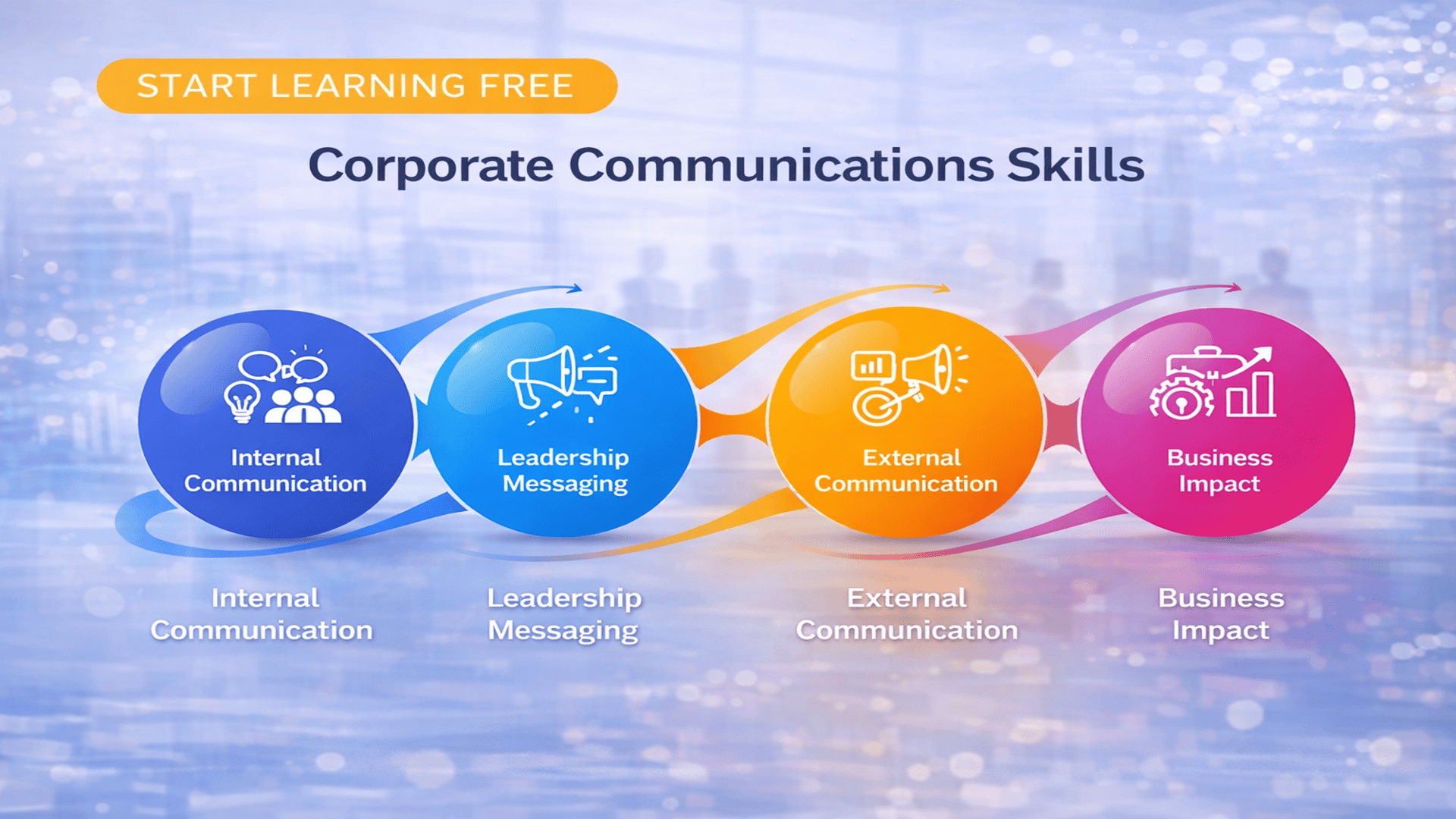
Strong corporate communication can shape how people understand a company, trust its leadership, engage with its mission, and respond to its brand. In modern organizations, communication is no longer limited to announcements or public messaging. It now touches internal culture, employee engagement, transparency, storytelling, media relations, customer communication, and social media strategy. This specialization is designed to help learners build those capabilities through a structured learning path focused on internal and external communication.
According to the official program page, this specialization is offered by the University of California, Irvine. It is a 3-course series, listed at beginner level, requires no previous experience, takes about 12 weeks at 2 hours a week, includes a flexible schedule, and offers a shareable certificate. The page also shows 7,515 already enrolled and a 4.6 rating from 156 reviews of courses in the program.
One reason this program stands out is its relevance to today’s work environment. The official description explains that with the increasing adoption of remote and hybrid work, effective communication in a corporate setting has become more critical than ever. The program is designed to help learners build a strong, cohesive corporate culture through transparency, storytelling, mission-driven communication, values, and DEI-focused initiatives, while also improving brand promotion, customer communication, media relations, investor communication, and social media engagement.
Why Corporate Communications Skills Matter
Corporate communications affects both internal performance and external perception. Inside an organization, it can improve alignment, engagement, trust, and culture. Outside the organization, it helps shape reputation, customer relationships, media messaging, and audience connection. This specialization focuses on both dimensions, which makes it useful for professionals who want to become more strategic communicators rather than simply better writers or presenters.
The skills listed on the official page show how broad and practical this topic is. Learners build knowledge in business communication, corporate communications, crisis management, customer communications management, diversity and inclusion, employee engagement, employee retention, internal communications, interpersonal communications, media relations, public relations, social media, stakeholder communications, storytelling, strategic communication, and target audience strategy. That mix is especially valuable for professionals who want to strengthen leadership visibility and business impact.
What You Will Learn
The program page highlights three main learning outcomes. Learners will identify terms, tools, and strategies for corporate communication, analyze professional scenarios to choose the best communication strategy for the situation, and reflect on different forms of communication across a variety of workplace contexts. These outcomes make the program practical for real-world communication challenges, not just theory.
The specialization also includes applied learning. Throughout the series, learners work with real-world corporate communication scenarios, and the program closes with a final exam that asks learners to apply concepts from all three courses to improve organizational communication. That structure gives the program more practical value for professionals who want usable communication skills they can transfer into actual workplace settings.
The 3 Courses Inside the Program
1) Introduction to Corporate Communications
The first course is listed at 8 hours and introduces core communication principles. Learners study the benefits of transparency and storytelling, how to choose collaboration tools and communication channels for different audiences, and the personality traits and skills required for various communication roles. This course helps build a foundation for understanding communication strategy in modern organizations.
2) Internal Communications Framework
The second course is listed at 7 hours and focuses on internal communication strategy. The official page says learners identify tools and strategies for effective internal communications, increasing employee engagement, and managing crisis communications. They also study how mission statements, values, and diversity, equity, inclusion, and belonging initiatives help build strong corporate cultures, along with situations that require transparency in executive-level communication.
3) External Communications Channels
The third course is listed at 8 hours and focuses on external communication. Learners identify strategies for effective external communications, promoting corporate branding, and communicating with media and investor relations. They also differentiate between internal and external communications and explore how social media and two-way communication can strengthen customer and stakeholder relationships.
Who Should Take This Program
This specialization is a strong fit for professionals who want to grow in communication, branding, public relations, internal communications, employee engagement, or leadership-related roles. It can also be valuable for people entering the field who want a structured, beginner-friendly foundation. Since the official page states that no previous experience is required, it is accessible to learners starting from zero while still offering useful strategic value for working professionals.
It is especially relevant for people who want to improve how they communicate across teams, shape organizational culture, manage executive messaging, strengthen external brand communication, or build more effective audience engagement strategies. In that sense, the program supports both career development and real business communication performance.
How This Program Supports Leadership, Messaging, and Business Impact
Leadership communication is not only about speaking clearly. It is about choosing the right message, using the right channel, understanding the audience, and communicating in a way that builds trust and alignment. This specialization supports that broader skill set by combining strategy, transparency, storytelling, culture, media relations, and social media into one learning path.
The program also helps learners see the connection between communication and business results. Internal communication can drive engagement and retention, while external communication can strengthen reputation, brand clarity, customer trust, and stakeholder relationships. By covering both areas together, the specialization becomes more useful for professionals who want communication skills that influence real organizational outcomes.
Start Learning Free: How to Begin
One of the strongest conversion angles for this program is simple: readers can start learning free. That message works well because many people want to explore a program before making a bigger commitment. Since this is a specialization made up of individual courses, the most practical path is to open the main program page, scroll down to one of the included courses, open that course, click Enroll, sign in, and choose Preview instead of Start Free Trial when that option is available. The program page clearly shows that the specialization contains three separate courses, which supports this access method.
How to Start Learning Free
✅ Open the course link
✅ If the page is a Professional Certificate or Specialization, scroll down and select one of the individual courses inside the program
✅ Open the course you selected
✅ Click Enroll
✅ After signing in, choose Preview instead of Start Free Trial
✅ You can now watch the course videos and start learning for free
Build Stronger Corporate Communications Skills for Leadership and Business Impact
Improve internal communication, external messaging, storytelling, brand communication, and audience engagement with a practical learning path designed for modern professionals.
Explore the program and begin with the preview option available through an individual course inside the specialization.