Start Learning Free: Construction Management Skills to Boost Career Growth and Project Success

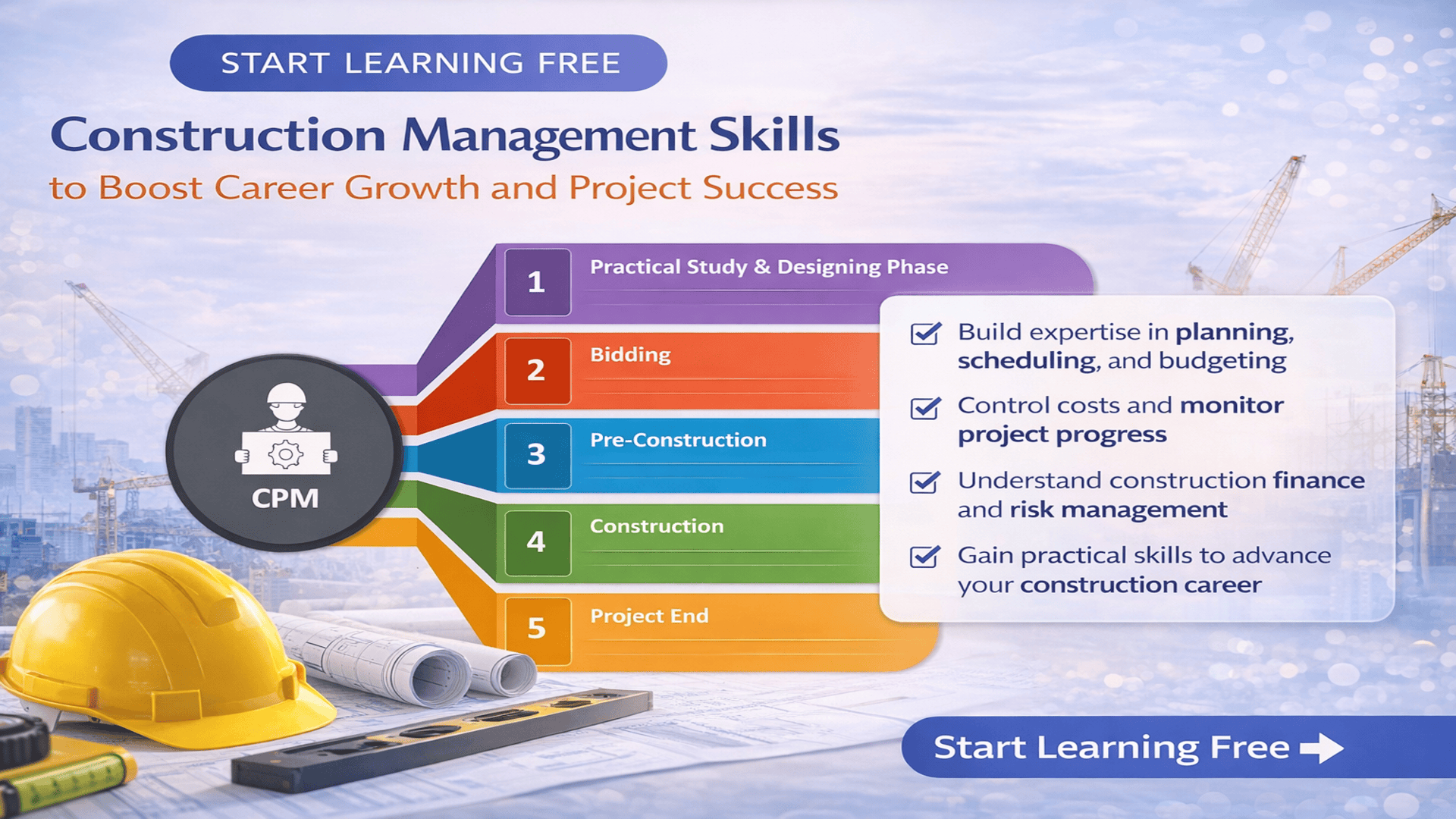
Construction projects demand more than technical knowledge. They require strong planning, scheduling, budgeting, cost control, financial understanding, and the ability to keep complex work moving from initiation to closeout. That is why construction management remains one of the most valuable skill areas for professionals who want to grow in project-based roles. This specialization is designed to help learners build those practical capabilities through a structured 5-course series covering project management, scheduling, cost estimating, finance, and the future of the construction industry.
According to the official program page, this specialization is offered by Columbia University, is beginner level, requires no prior experience, takes about 3 months at 10 hours per week, and includes a flexible schedule plus a shareable certificate. The page also states that more than 167,000 learners have already enrolled and that the courses in the program hold a 4.7 rating from 9,715 reviews.
One of the strongest reasons to promote this program is that it connects career growth directly to real construction work. The specialization covers major construction management fundamentals, key project scheduling techniques, cost estimation, cost control, project financials, and important technology and sustainability trends shaping the industry. It is positioned for professionals in construction and civil engineering who want to advance their careers and stay relevant as the field evolves.
Why Construction Management Skills Matter
Strong construction management skills can improve both day-to-day job performance and long-term career potential. Professionals in this field often need to coordinate teams, manage timelines, monitor budgets, reduce risk, interpret financial information, and support successful project delivery. Employers value people who can do more than execute tasks. They value people who can organize work, anticipate issues, and keep projects aligned with cost, time, and quality goals.
This program is useful because it addresses those needs directly. The official page lists skills such as construction estimating, cost control, cost estimation, project risk management, project schedules, bidding, finance, project closure, building information modeling, lean methodologies, and timelines. Those are highly practical areas that support stronger decision-making across the project lifecycle.
What You Will Learn
The specialization teaches learners how construction projects are initiated, planned, scheduled, estimated, controlled, and financially evaluated. It also includes applied learning in every course, with real-world projects designed to reinforce the concepts being taught. The official description says that by the end of the series, learners will be able to create a work breakdown structure, build a project schedule, work on a project plan, create a project budget, identify risk, and assign responsibility for those risks.
That combination is valuable because construction success depends on coordination across many areas. A professional who understands only one part of the process may struggle to see the full picture. A professional who understands planning, scheduling, budgeting, risk, and finance is better prepared to support successful outcomes and advance into larger responsibilities.
The 5 Courses Inside the Program
1) Construction Project Management
This first course focuses on the fundamentals of construction management, including the construction industry, the role of the project manager, contract types, project delivery methods, lean delivery, sustainability, technology trends, and project planning. It is listed at 30 hours and gives learners a strong foundation for the rest of the specialization.
2) Construction Scheduling
The second course focuses on scheduling techniques and procedures. It teaches learners how to develop and manage schedules and how to understand scheduling tools such as bar charts, activity on arrow, and activity on nodes. It also covers relationships between construction activities, the critical path, and project float. This course is listed at 24 hours.
3) Construction Cost Estimating and Cost Control
This course covers the fundamentals of cost estimation, the design phase for performing estimates, the closeout period of a project, punch lists, final approval, client turnover, and cost control methods with emphasis on Earned Value Method. It is listed at 23 hours and is especially relevant for professionals who need stronger control over budgets and project performance.
4) Construction Finance
The fourth course focuses on the economics of construction projects, including the definition and calculation of interest rates and the importance of cash flow diagrams. It is listed at 20 hours and helps learners understand the financial side of project decisions more clearly.
5) The Construction Industry: The Way Forward
The final course focuses on broader industry direction, including sustainability, building information modeling, and technology trends in construction. It is listed at 9 hours and gives learners a wider strategic view of where the industry is heading.
Who Should Take This Program
This specialization is a strong fit for construction professionals, civil engineering professionals, project coordinators, site professionals, and early-career learners who want a clearer understanding of how projects are planned and managed. Because it is beginner friendly and requires no prior experience, it is also accessible for people who want to build a solid foundation before moving into larger project responsibilities.
It can also be valuable for professionals already working in the field who want stronger scheduling, cost control, finance, or planning skills. Since the program covers both practical project tools and broader industry trends, it can help learners improve current performance while also preparing for future career growth.
How This Program Supports Career Growth and Project Success
Construction careers often grow when professionals become more capable in the areas that matter most to project delivery. A person who can build schedules, understand cash flow, create budgets, identify risk, and manage project planning is often more useful than someone with only narrow task knowledge. This specialization supports that broader capability by combining technical project skills with financial awareness and industry direction.
The applied learning structure also makes the program more practical. Real-world projects are built into each course, and learners are expected to apply concepts through project work and peer review. That means the specialization is not only about watching lessons. It is also about practicing the tools and thinking patterns used in real construction environments.
Start Learning Free: How to Begin
A major advantage for promotion is the ability to tell readers they can start learning free. That phrase attracts attention because many professionals want to explore valuable career content before making a bigger commitment. For a specialization like this one, the practical path is to open the main program page, scroll down to one of the individual courses inside the program, open that course, click Enroll, sign in, and choose Preview instead of Start Free Trial when that option appears. That gives learners a way to begin watching course content and exploring the material right away.
How to Start Learning Free
✅ Open the course link
✅ If the page is a Specialization, scroll down and select one of the individual courses inside the program
✅ Open the course you selected
✅ Click Enroll
✅ After signing in, choose Preview instead of Start Free Trial
✅ You can now watch the course videos and start learning free
Build Stronger Construction Management Skills for Better Projects
Improve planning, scheduling, cost control, construction finance, and project management skills with a professional learning path designed for career growth.
Explore the program and begin with the preview option available through an individual course inside the specialization.