Start Learning Free: Introduction to Systems Engineering – Build Core Skills for Designing and Managing Complex Systems

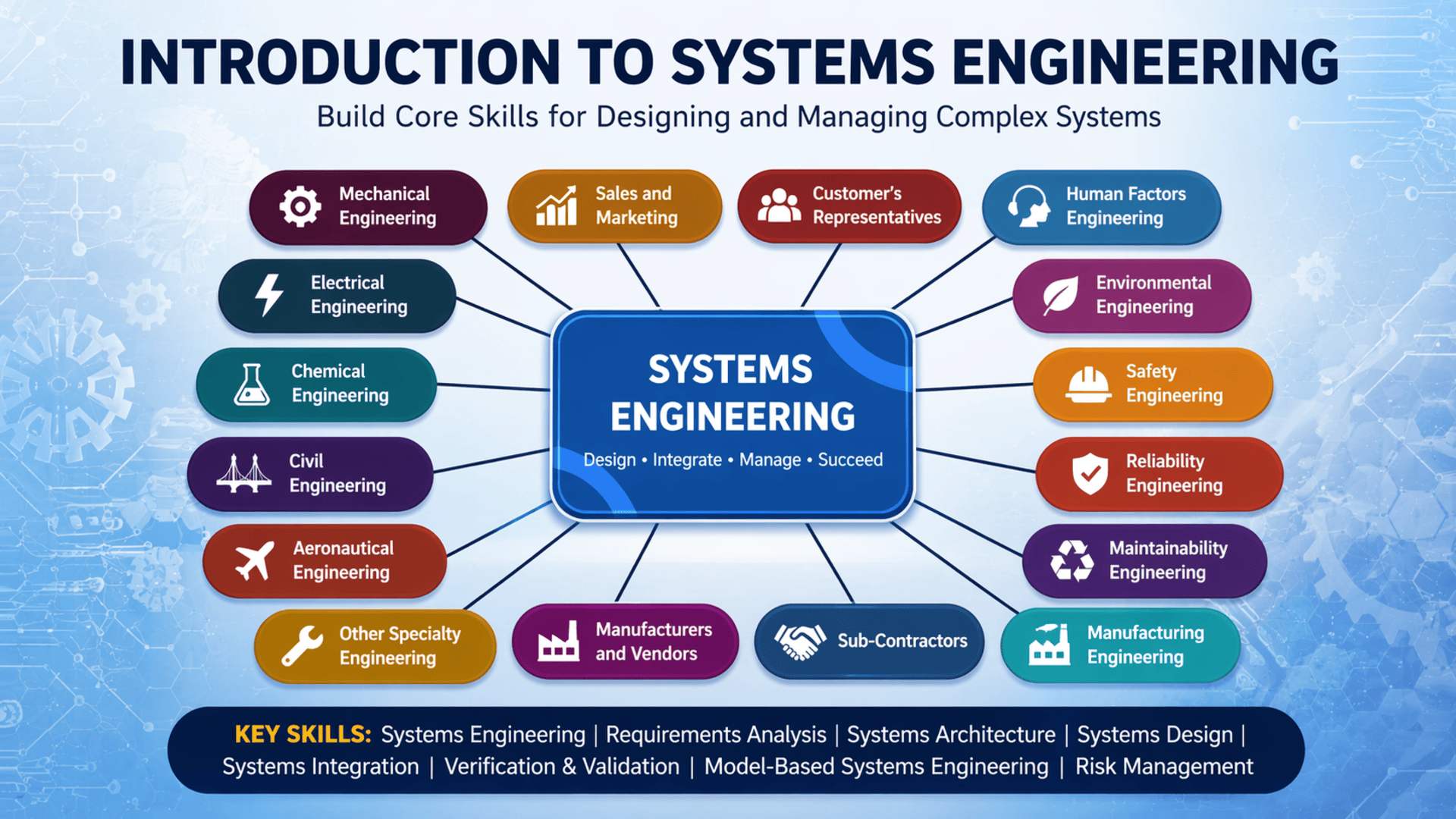
Modern engineering projects are more connected, more technical, and more complex than ever. That is exactly why systems engineering has become such an important discipline. Instead of looking at parts in isolation, systems engineering helps professionals understand how components, requirements, risks, architecture, validation, and lifecycle decisions come together to shape successful outcomes.
That makes Start Learning Free: Introduction to Systems Engineering a strong message for learners who want practical, career-relevant skills in complex system design and management. The specialization page highlights skills such as systems engineering, requirements analysis, systems architecture, systems design, systems integration, verification and validation, risk management, and model-based systems engineering.
This program is especially appealing because it is not positioned as a narrow or overly theoretical course. The first course in the specialization explains that learners gain a foundational understanding of systems engineering and follow the system design and life cycle from initial design and architecture through development, production, and ongoing management. It also emphasizes understanding how system components interact, how they support project goals, and how systems engineering contributes to operational success and effective risk management.
Why This Program Matters
Many organizations struggle not because individual parts fail, but because systems are not defined, integrated, reviewed, or managed properly across the full lifecycle. Systems engineering helps reduce that problem by creating a structured way to define requirements, manage interfaces, assess trade-offs, handle risks, and verify that the final system performs as intended. That is why this field matters across aerospace, defense, manufacturing, transportation, energy, and other complex engineering environments. The specialization page reinforces this value by highlighting requirements management, functional requirements, systems analysis, systems architecture, systems design, integration, and risk-related skills.
From an SEO perspective, this topic also has strong search value because learners commonly look for phrases such as “start learning free systems engineering,” “introduction to systems engineering course,” “systems engineering for beginners,” and “systems design and lifecycle course.” Using start learning free naturally in the title and article helps attract readers who want a low-friction entry point before deciding whether to continue deeper.
What You Will Learn
This learning path is designed to build a broad understanding of how complex systems are developed and managed. Based on the specialization and course pages, learners can build knowledge in:
✅ Systems Engineering
✅ Requirements Analysis
✅ Systems Architecture
✅ Systems Design
✅ Systems Integration
✅ Verification and Validation
✅ Model-Based Systems Engineering
✅ Risk Management
✅ Project Scoping
✅ Design Reviews
✅ Engineering Managemen
The first course also makes it clear that learners study the system design and life cycle from early architecture through development, production, and ongoing management, while understanding how system components interact and contribute to project goals.
Program Structure and Learning Path
The specialization page shows that this program includes multiple systems-engineering skill areas and builds toward practical engineering and management capabilities such as requirements management, systems design, systems integration, design reviews, cost management, contract management, and project risk management.
The course pages connected to this specialization also show a logical progression. The first course, Introduction to Systems Engineering, provides the foundation and includes 9 modules. It focuses on the system design and life cycle, architecture, development, production, and ongoing management.
A later course, Applying Systems Engineering to the Design Process, is listed at 2 weeks at 10 hours per week and notes that completion of the first course is recommended. It focuses on applying systems engineering fundamentals to the design process and is marked beginner level.
Another related course, The Need for Systems Engineering, introduces the principles of systems engineering, explains why the field matters in the development of complex systems, and covers how to identify systems, manage their complexity, and describe their life cycle using real-world engineering examples.
Together, these details show that the specialization is built to move learners from foundational understanding toward more applied systems-engineering thinking.
Who Should Take This Program
This program is a strong fit for:
✅ Engineering students who want a practical introduction to complex systems
✅ Early-career engineers building systems-thinking skills
✅ Technical professionals moving into systems, integration, or architecture roles
✅ Project and program professionals working on complex engineering initiatives
✅ Learners who want to start learning free before committing to the full specialization
Because the first course focuses on fundamentals and the related course pages describe beginner-level content, this learning path can work well for learners who want a structured introduction rather than an advanced specialist-only course.
Why “Start Learning Free” Is a Strong SEO Angle
The phrase start learning free works well because it directly matches what many users are already searching for. It lowers hesitation, improves click appeal, and gives readers a simple next step. For a technical topic like systems engineering, that matters even more, because many visitors want to preview the course style and content before deciding whether it matches their goals.
How to Start Learning Free This Course
Here is the exact guide you wanted included:
How to Start Learning Free
- Open the course link.
- If the page is a Professional Certificate or Specialization, scroll down and select one of the individual courses inside the program.
- Open the course you selected.
- Click Enroll.
- After signing in, choose Preview instead of Start Free Trial.
- You can now watch the course videos and start learning for free.
This guide fits especially well here because the page is a specialization, so readers who want to start learning free should enter through one of the included individual courses and then look for the preview option during enrollment.
Build Core Systems Engineering Skills for Complex Projects
Learn systems design, requirements analysis, systems architecture, integration, lifecycle thinking, and risk management in a practical introduction to complex systems.
Open the program, choose one of the included courses, and use the Preview option to begin learning for free when available.